
 SERVING ANAHEIM, CA & SURROUNDING AREAS
 CALL TODAY
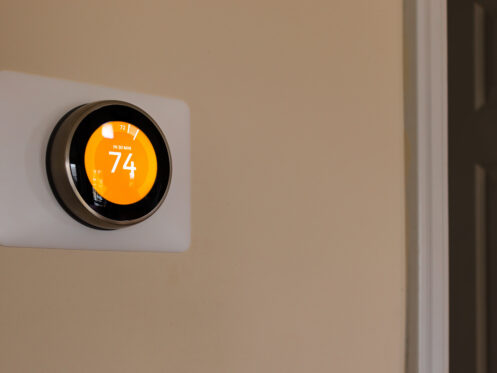
During a hot Anaheim summer, your air conditioner is one of the biggest energy consumers in your home. Every degree you cool your house costs money, and any wasted energy adds up quickly on your monthly bills. This is where modern technology offers a solution.
Smart thermostats use artificial intelligence to cut cooling waste by learning your unique habits. They figure out when your home truly needs cooling, when your rooms can safely warm up a few degrees, and when your AC might be running longer than it should. It’s a proactive approach to comfort that can lead to significant savings.
Smart Thermostats Learn Your Cooling Patterns
Unlike a basic programmable thermostat that follows a rigid schedule, a smart thermostat with AI actively learns about your home and lifestyle. Its sensors track data points beyond just the current temperature. The system learns how quickly your home heats up in the Southern California sun and how long it takes for the air conditioner to cool it back down. This is your home’s thermal profile.
The thermostat also monitors when you and your family are usually home, away, or asleep. By combining this data, the AI builds a dynamic cooling schedule that is far more efficient than a fixed program, making intelligent adjustments from real-time conditions and your actual patterns of use.
Less Cooling When the House Is Empty
One of the most significant sources of wasted energy is cooling an empty house to the same temperature as when it’s occupied. Smart thermostats solve this problem with features like geofencing, which uses your smartphone’s location to determine if anyone is home. When the last person leaves, the thermostat automatically adjusts to an energy-saving temperature. When the first person starts heading back, it begins cooling the house to your preferred comfort level.
You can also use the mobile app to adjust settings remotely or activate a vacation mode for extended trips. The goal is not to shut the AC off completely, which can lead to high humidity, but to use controlled setbacks that allow the system to run less often without sacrificing comfort.
Better Timing During the Hottest Part of the Day
Your air conditioner works hardest during the peak heat of the afternoon. A traditional thermostat often waits until the house is already uncomfortably warm before kicking on, forcing the AC into a long, difficult, and expensive cooling cycle. A smart thermostat, however, can use its learning capabilities and local weather data to anticipate these heat spikes. It may start cooling the house down gradually before the hottest part of the day arrives.
This pre-cooling strategy uses less energy than trying to fight against peak thermal load. As a result, your system can maintain a more stable and comfortable indoor temperature without the stressful and inefficient afternoon run cycles.
Fewer Manual Changes That Waste Energy
Many people have a habit of constantly fiddling with the thermostat, cranking it down when they feel warm and then pushing it back up when they get too cold. These frequent, large manual adjustments can make your AC system work harder and less efficiently, leading to higher energy consumption.
An AI-powered thermostat learns your preferred comfort ranges over time. Instead of waiting for you to make a big change, it makes small, precise, and proactive adjustments throughout the day to keep the temperature within that ideal zone. This smooths out the system’s workload, prevents drastic temperature swings, and ultimately reduces the energy from over-cooling.
Humidity Data Helps Explain Why the House Feels Warm
Have you ever felt warm and sticky even when the thermostat shows a cool temperature? That’s because humidity plays a huge role in how we perceive temperature. High indoor humidity makes the air feel much warmer than it actually is, often prompting homeowners to lower the AC setting unnecessarily. Many advanced smart thermostats have built-in humidity sensors.
This data can be incredibly valuable, letting you see if the real issue is moisture, not temperature. It can help you determine whether you need to adjust your AC’s fan settings for better dehumidification, schedule system maintenance, or consider a whole-home dehumidifier to achieve true comfort without over-cooling.
Alerts Can Catch Costly Problems Earlier
Beyond comfort and savings, a smart thermostat can also act as a valuable monitoring tool for your HVAC system’s health. Because its AI is constantly analyzing performance data, it can recognize when something is amiss. It can send you an alert for unusual activity, such as your AC running much longer than normal to reach the set temperature, which could indicate a refrigerant leak or dirty coils.
You might also get notifications for extreme temperature swings, poor temperature recovery after a setback, or sudden spikes in indoor humidity. While these alerts don’t diagnose the specific problem, they are an excellent early warning system, letting you know it’s time to schedule a professional AC service call before a minor issue becomes a major breakdown.
A Smart Thermostat Still Needs a Healthy AC
It’s important to remember that a smart thermostat is the brain of your HVAC system, but it can’t make the body stronger. While it can optimize performance and reduce energy waste, it can’t fix underlying mechanical problems with your air conditioner. If your system has dirty coils, a clogged air filter, leaky ducts, low refrigerant, or is simply old and failing, a smart thermostat can only do so much.
To get the full benefit of its intelligent features, the thermostat needs to control a well-maintained cooling system. This is why pairing your smart device with our HVAC maintenance plan is essential.
When a Smart Thermostat Is Worth It
While almost any home can benefit from smarter control, the investment in a smart thermostat is particularly worthwhile for certain households. If you frequently forget to adjust the thermostat when you leave or go to bed, the automated savings will quickly pay for the device. It’s also a great fit for people with unpredictable or changing schedules, as the AI can adapt without constant reprogramming.
Families that travel often, want the convenience of app control from anywhere, or are dealing with uneven comfort in their home will also see significant benefits. Finally, if you’re a data-driven homeowner who wants better visibility into your AC’s performance and energy usage, a smart thermostat installation is an excellent choice.
Talk With Associated Heating & Air About Smarter Cooling Control
A smart thermostat is a powerful tool for lowering summer energy bills, but its effectiveness depends on your home, your lifestyle, and the health of your HVAC system. Our family-owned company has been helping homeowners since 1990, and our NATE-certified technicians have the expertise to assess your complete setup. We can review your current thermostat, evaluate your air conditioner’s condition, and discuss your specific comfort concerns.
From there, we can help you decide if a smart thermostat, an AC tune-up, or another cooling improvement makes the most sense for your home. To learn more, contact Associated Heating & Air for expert cooling advice in Anaheim, CA.